
Partial Dentures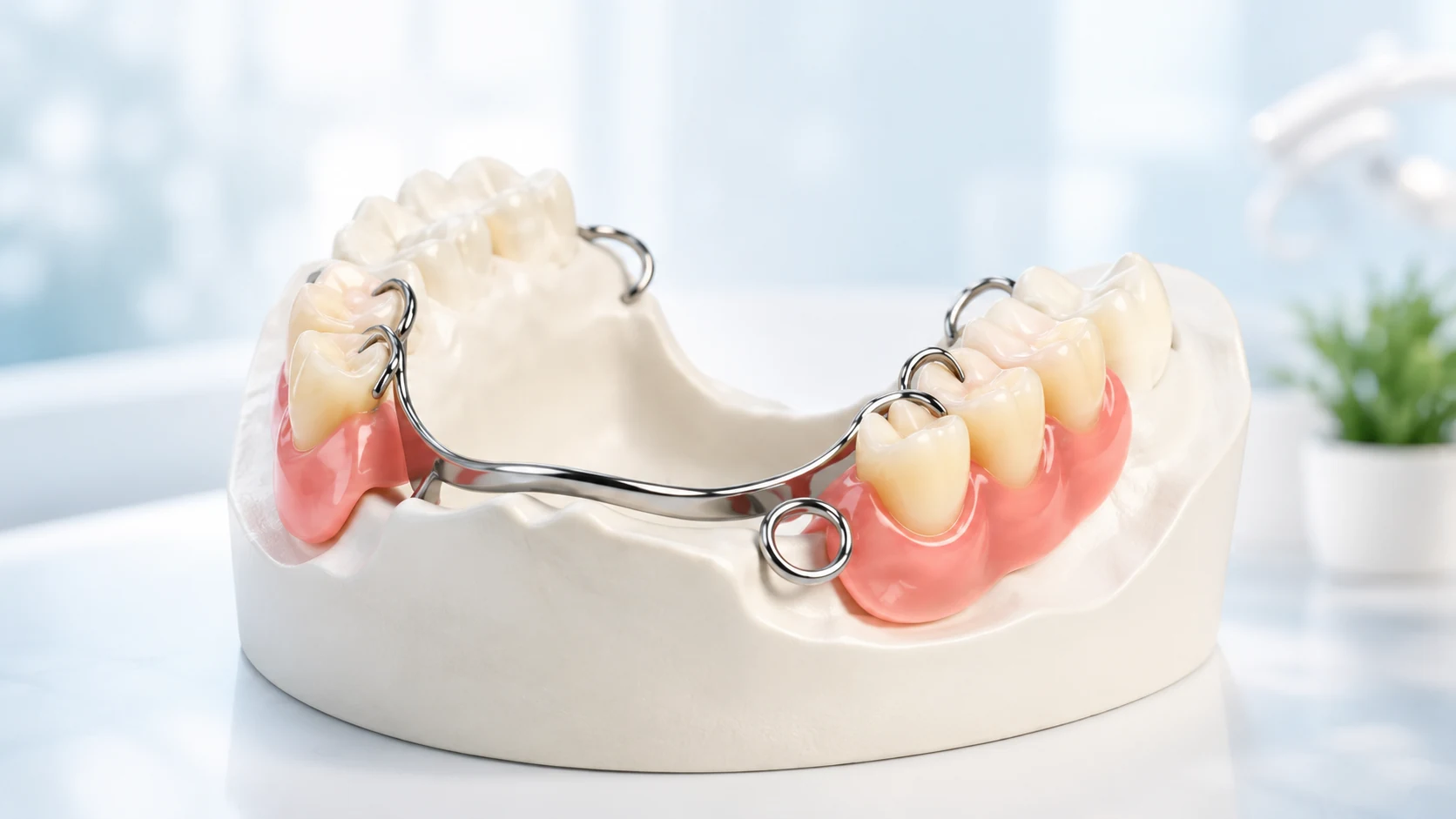 A partial denture is a removable appliance that replaces several missing teeth while some of your healthy natural teeth stay in place, and Kaw Valley Family Dental makes custom partials for patients throughout Bonner Springs, KS. It clasps onto the teeth you still have and fills the gaps, so you can chew and speak more comfortably. That is the main thing that sets a partial apart from a full denture: a full denture replaces every tooth in an arch, while a partial works alongside the natural teeth you have kept. A partial denture is a removable appliance that replaces several missing teeth while some of your healthy natural teeth stay in place, and Kaw Valley Family Dental makes custom partials for patients throughout Bonner Springs, KS. It clasps onto the teeth you still have and fills the gaps, so you can chew and speak more comfortably. That is the main thing that sets a partial apart from a full denture: a full denture replaces every tooth in an arch, while a partial works alongside the natural teeth you have kept.If you have lost a few teeth but not all of them, a partial is often the first option worth understanding. For full-mouth tooth loss, our dentures page is the better starting point. What Are Partial Dentures?A removable partial denture, sometimes called an RPD, fills the space left by several missing teeth. Small clasps or attachments anchor it to your remaining natural teeth, so it stays secure while you eat and talk, then lifts out for cleaning. A partial does one more quiet job. When teeth are missing, the ones nearby tend to drift toward the open space over time, and a well-fitted partial helps keep those teeth from drifting while restoring much of your chewing and speaking. Types of Partial DenturesThere are three common types of removable partials, and the right one comes down to an exam, not a menu. Cast Metal PartialsA cast metal partial uses a slim, rigid metal framework with replacement teeth set into gum-colored acrylic. It is the durable, long-term standard and holds up well to daily use. One practical advantage is that if you lose another tooth later, a cast metal partial can often have a tooth added to it instead of being remade from scratch. The tradeoff is visibility: the metal clasps that grip your natural teeth can show, depending on where the gaps are, and this option usually costs more than acrylic. Acrylic Partials (Flippers)An acrylic partial, often called a flipper, has an acrylic base with clasps and is the lighter, lower-cost choice. It works best as a temporary or interim solution, for example while you heal after an extraction or wait for an implant. It isn’t built for permanent, long-term wear. The base is bulkier, and acrylic is less durable than a metal framework. Think of a flipper as a helpful placeholder rather than a lasting fix. Flexible PartialsA flexible partial is made from a thin, gum-colored material that bends slightly and skips the visible metal clasps, so it tends to look the most natural. It can also suit patients with a metal or acrylic sensitivity. The tradeoffs are real, though. Flexible partials rest more on your gum tissue than on your teeth, which can lead to sore spots, and they are harder to reline or repair. If you lose another tooth, a flexible partial usually can’t be added to and needs a full remake. It is a strong option for some patients, but it isn’t automatically the best one. Because each type carries different tradeoffs in looks, comfort, and durability, we confirm the right fit by examining your remaining teeth and gums rather than choosing from a description. Partial Dentures vs. Bridges vs. ImplantsMost people weighing a partial are also looking at a bridge or an implant. Each replaces missing teeth in a different way, and each is the better call in different situations.
None of these is the right answer for everyone. Cost is part of the decision, and it shifts with the type you choose and how many teeth are involved. Our team reviews your dental insurance and payment options with you, and our Financial and Insurance page lays out how billing and financing work. Caring for Your Partial DenturesA partial lasts longer and stays more comfortable with daily care, and the routine is simple once it becomes a habit. Take the partial out and clean it every day with a soft brush and a non-abrasive denture cleaner, not regular toothpaste, which can scratch it. When it is out of your mouth, keep it in water or a soaking solution so it doesn’t dry out and warp. Never force a partial into place by biting down, since that can bend the clasps or crack the base. And if it starts to feel sore, loose, or rubs a spot raw, call us instead of adjusting it yourself. Small adjustments are normal, especially in the first weeks, and they are easy for us to make. Why Choose Our Team for Partial Dentures Kaw Valley Family Dental brought together two established Bonner Springs practices in 2026, and denture and partial care has long been a strength of that combined team. Our dentists, Dr. Ricky Atchison Jr., Dr. William E. Hartman, Dr. Robert Eckenberg, and Dr. Ryan Ochsner, handle the fitting and the follow-up so your partial works the way it should. Kaw Valley Family Dental brought together two established Bonner Springs practices in 2026, and denture and partial care has long been a strength of that combined team. Our dentists, Dr. Ricky Atchison Jr., Dr. William E. Hartman, Dr. Robert Eckenberg, and Dr. Ryan Ochsner, handle the fitting and the follow-up so your partial works the way it should.Getting a partial right is less about the first appointment and more about the adjustments that follow. A new partial almost always needs fine-tuning as your mouth settles, and we plan for those visits rather than leaving you to cope on your own. We will also tell you honestly when a bridge or an implant would serve you better than a partial, because the goal is the option that fits your mouth, not a single product. Schedule Your ConsultationThe clearest way to find out which partial fits your teeth, your gums, and your budget is a straightforward exam. You can reach Kaw Valley Family Dental at (913) 441-1600, or request a visit through our Request an Appointment page. We will look at what you have, talk through your options, and give you a clear plan for replacing your missing teeth in Bonner Springs. |
| Hours Mon Tues Weds Thur Fri 8am to 5pm 8am to 5pm 8am to 5pm 8am to 5pm 8am to 3pm |
