
Implant-Supported Dentures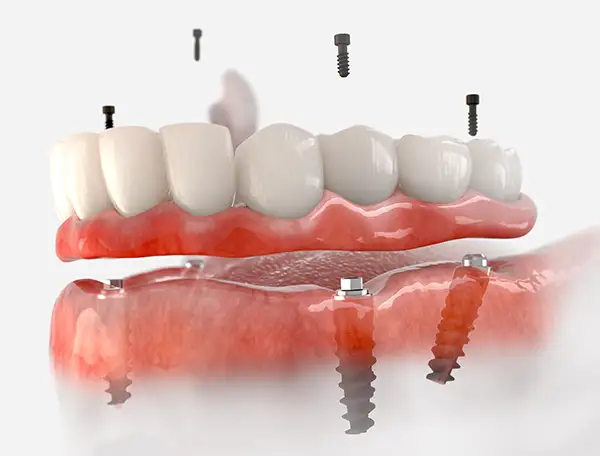 If your denture slips, clicks, or needs adhesive to get through a meal, an implant-supported denture anchors onto a small number of implants for a far steadier fit, and Kaw Valley Family Dental provides implant-supported dentures for patients across Bonner Springs, KS. Instead of resting on your gums and relying on suction, the denture connects to implants set in the jaw. Unlike a single tooth implant, which replaces one tooth, this restores a full arch. If you are new to tooth replacement, our dentures page and dental implant page cover the two building blocks this option combines. If your denture slips, clicks, or needs adhesive to get through a meal, an implant-supported denture anchors onto a small number of implants for a far steadier fit, and Kaw Valley Family Dental provides implant-supported dentures for patients across Bonner Springs, KS. Instead of resting on your gums and relying on suction, the denture connects to implants set in the jaw. Unlike a single tooth implant, which replaces one tooth, this restores a full arch. If you are new to tooth replacement, our dentures page and dental implant page cover the two building blocks this option combines.What Is an Implant-Supported Denture?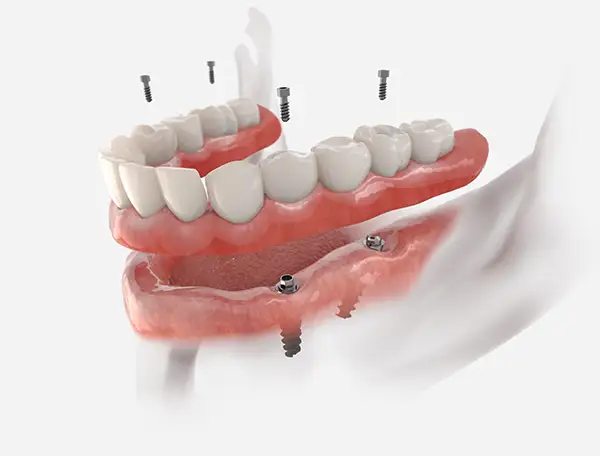 An implant-supported denture is a full denture that attaches to dental implants placed in the jaw, rather than sitting on the gums and held in by suction or paste. You may also hear it called an overdenture, or a snap-in or snap-on denture. A small number of implants per arch anchor the denture in place, which gives you much stronger chewing and far more stability than a conventional denture. Because the implants sit in the bone, they also help slow the jawbone loss that normally follows full tooth loss. For many long-time denture wearers, that mix of a secure fit and preserved bone is the reason they make the switch. An implant-supported denture is a full denture that attaches to dental implants placed in the jaw, rather than sitting on the gums and held in by suction or paste. You may also hear it called an overdenture, or a snap-in or snap-on denture. A small number of implants per arch anchor the denture in place, which gives you much stronger chewing and far more stability than a conventional denture. Because the implants sit in the bone, they also help slow the jawbone loss that normally follows full tooth loss. For many long-time denture wearers, that mix of a secure fit and preserved bone is the reason they make the switch.Removable vs. Fixed Implant DenturesImplant dentures come in two forms, and the difference matters for daily life.
How many implants you need and which attachment style fits your mouth are clinical decisions we make after an exam and imaging, not something you pick from a page. We will walk you through the tradeoffs once we have looked at your bone and your goals. How It Compares to Conventional Dentures and All-on-4It helps to see where this option sits between the two full-arch choices most people already know. A conventional denture rests on the gums, costs the least, and is the least stable, which is why it can slip. An implant-supported denture, the option on this page, anchors to implants for much more stability at a mid-range cost. A fixed full-arch solution like All-on-4 stays fixed in place, feels closest to natural teeth, and sits at the highest cost. Each of these is the right answer for someone. This page’s option tends to fit people who want a real step up from a slipping denture without the cost of a fully fixed bridge. The Implant-Supported Denture ProcessAn implant-supported denture is built in phases across several months, and the bulk of that stretch is your jaw healing, not appointments.
Plan on the full process spanning several months, and expect to wear a conventional denture during healing so you are never without teeth. If you need extractions or a bone graft first, that adds time before placement. None of this happens in a single appointment, and taking it in stages is exactly what gives the final result its durability. Are You a Candidate?Good candidates are adults who are missing a full arch of teeth, or facing full extraction, with enough healthy jawbone and general health for minor oral surgery. A few things can complicate treatment. Smokers tend to heal less predictably, since tobacco works against the bone fusion the implants rely on. Conditions that are not well controlled, like diabetes, can lower the odds of success, and thin jawbone may need grafting before implants go in. If you already wear a conventional denture and are tired of the slipping, you are exactly the kind of patient this option was designed for. An exam and imaging are what settle it, and that is what the first visit covers. Implant-Supported Denture Cost and PaymentCost is a fair question to raise early. Several things shape it: how many implants you need, whether you choose a removable or fixed denture, the attachment type, whether extractions or grafting are involved, and whether it is the upper or lower arch. As a rule, an implant-supported denture costs more than a conventional denture and less than a full fixed bridge, so it tends to land in the middle on price as well as on stability. We do not quote a flat figure, because your plan depends on the exam. Coverage varies from plan to plan, and implants have often been only partly covered or left out, so check what yours allows before you decide. We are glad to review your benefits and set up a payment plan, and our Financial and Insurance page goes into the details. Why Choose Our Team for Implant-Supported DenturesFull-arch tooth replacement is a big decision, and it helps to have a team that does this work regularly. Kaw Valley Family Dental formed when two long-running Bonner Springs practices merged in 2026, and between them our dentists, Dr. Ricky Atchison Jr., Dr. William E. Hartman, Dr. Robert Eckenberg, and Dr. Ryan Ochsner, bring years of denture and implant experience to each case. We map out each case with detailed imaging first, since planning the implant positions carefully is what makes the finished denture fit and function well. Just as important, we will tell you plainly whether a removable or fixed denture suits you better, and when a conventional denture or a fixed full-arch option would be the smarter choice. From the first consult on, you will understand each step, the reasoning behind our recommendation, and where the costs come from. Schedule Your ConsultationIf a loose denture is wearing on you, a consultation is the clearest next step. Book your consultation by phone at (913) 441-1600, or online through our Request an Appointment page. We will look at your jaw, talk through removable and fixed options, and give you a straight answer about implant-supported dentures here in Bonner Springs. |
| Hours Mon Tues Weds Thur Fri 8am to 5pm 8am to 5pm 8am to 5pm 8am to 5pm 8am to 3pm |
